
A standardized packaging infrastructure that keeps secondary-market devices sealed and individually tracked from the moment of grading through direct-to-consumer delivery — no repack, no relabel, no regrading.

Grade buckets hide the data that drives value.
Every repack erodes verified device condition.
Removable labels fail, get switched, create disputes.
Wholesale and D2C demand two separate workflows.
Automation can't scale inconsistent packaging.
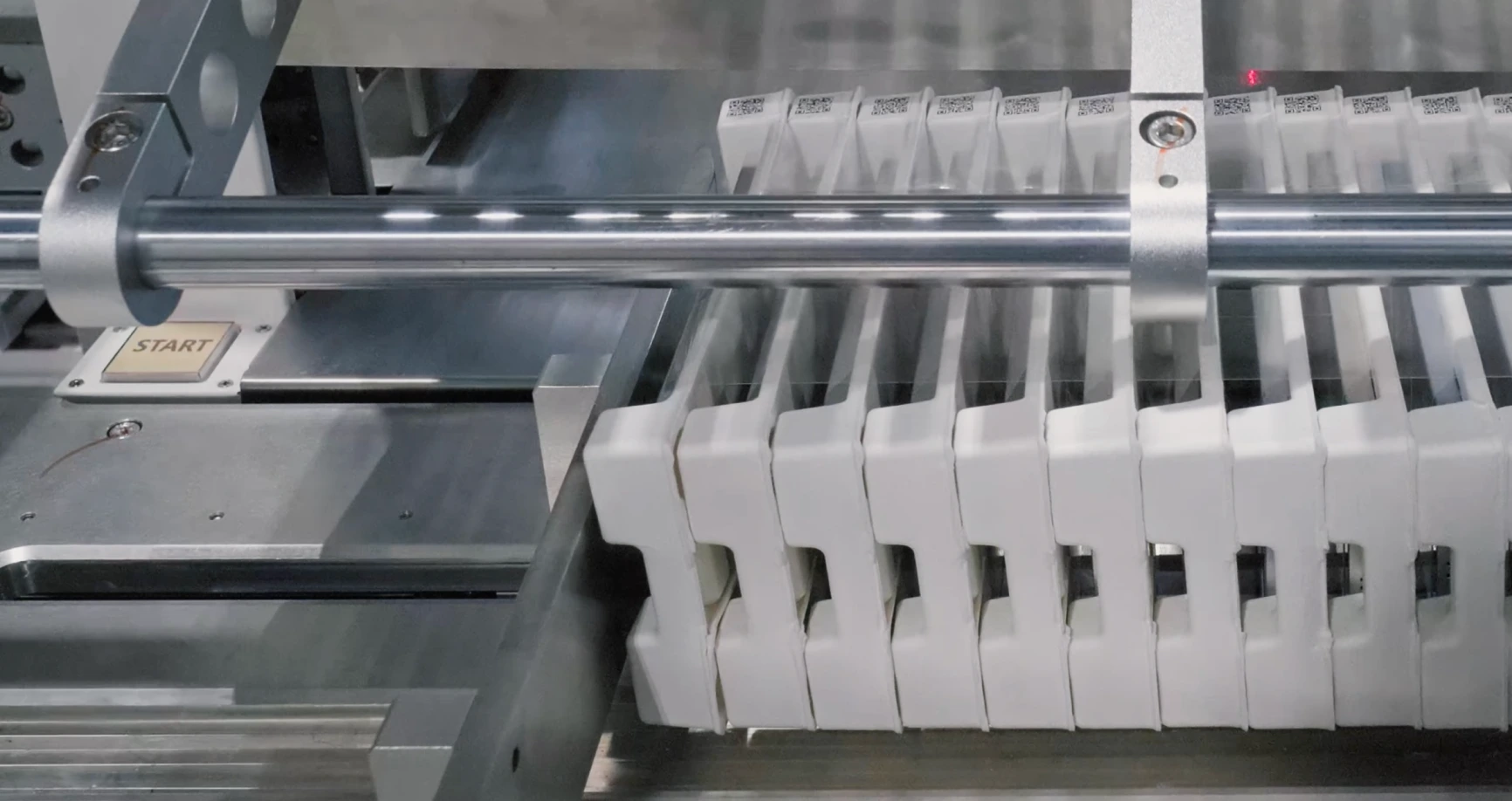
Device Shell is standardized packaging that becomes part of the device's verified record at the moment of grading.
A permanent identifier — etched into the packaging, not applied as a removable label — is linked to the device's digital history on the Apkudo Device Passport™ platform. From that point forward, the device travels sealed through bulk warehousing, reverse logistics networks, and direct-to-consumer fulfillment without a single repack.
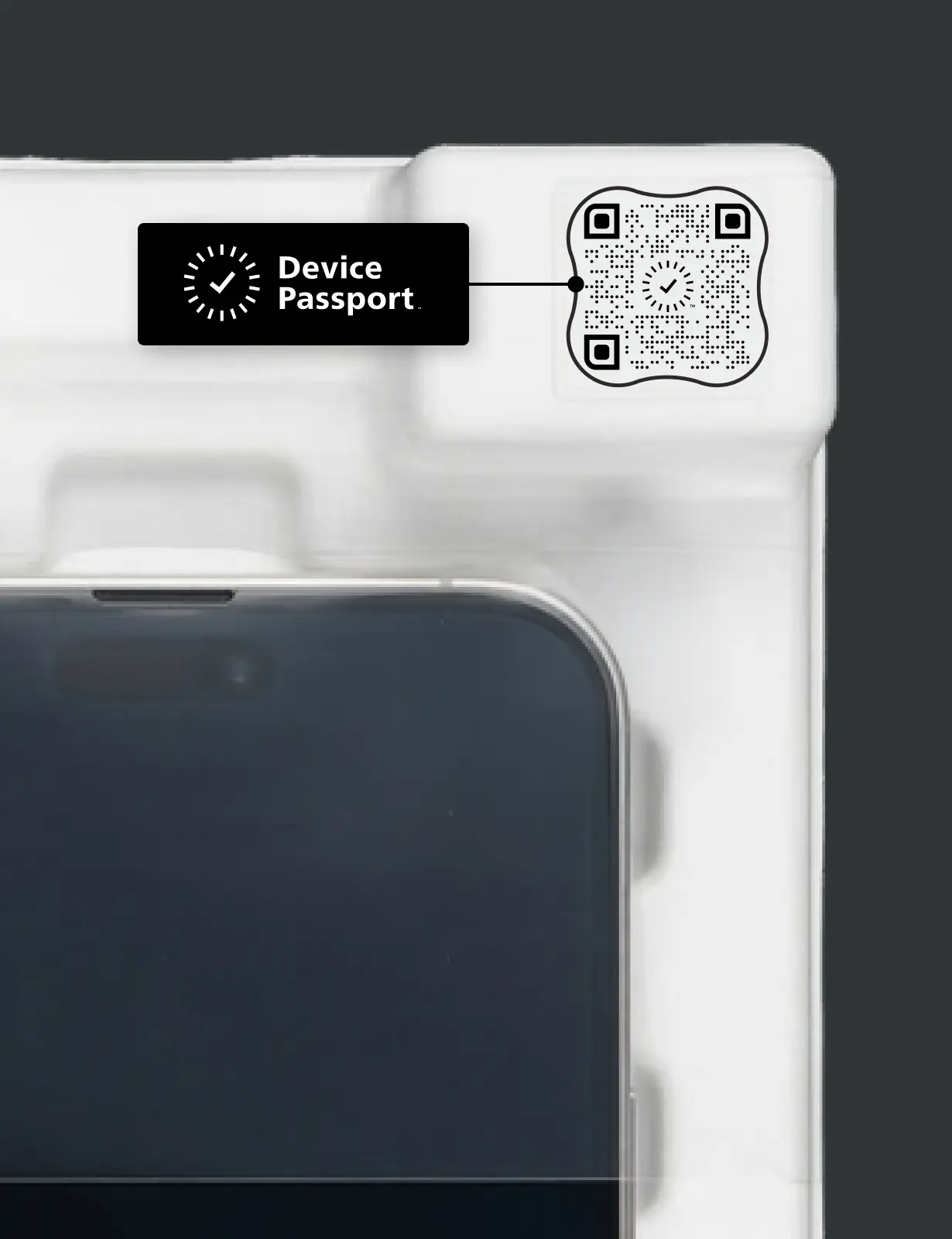
The Device Passport Platform unifies hardware and software. It captures device data across the full lifecycle.
Every device earns a record that travels wherever it sells. That persistent, canonical record replaces guesswork with proof.
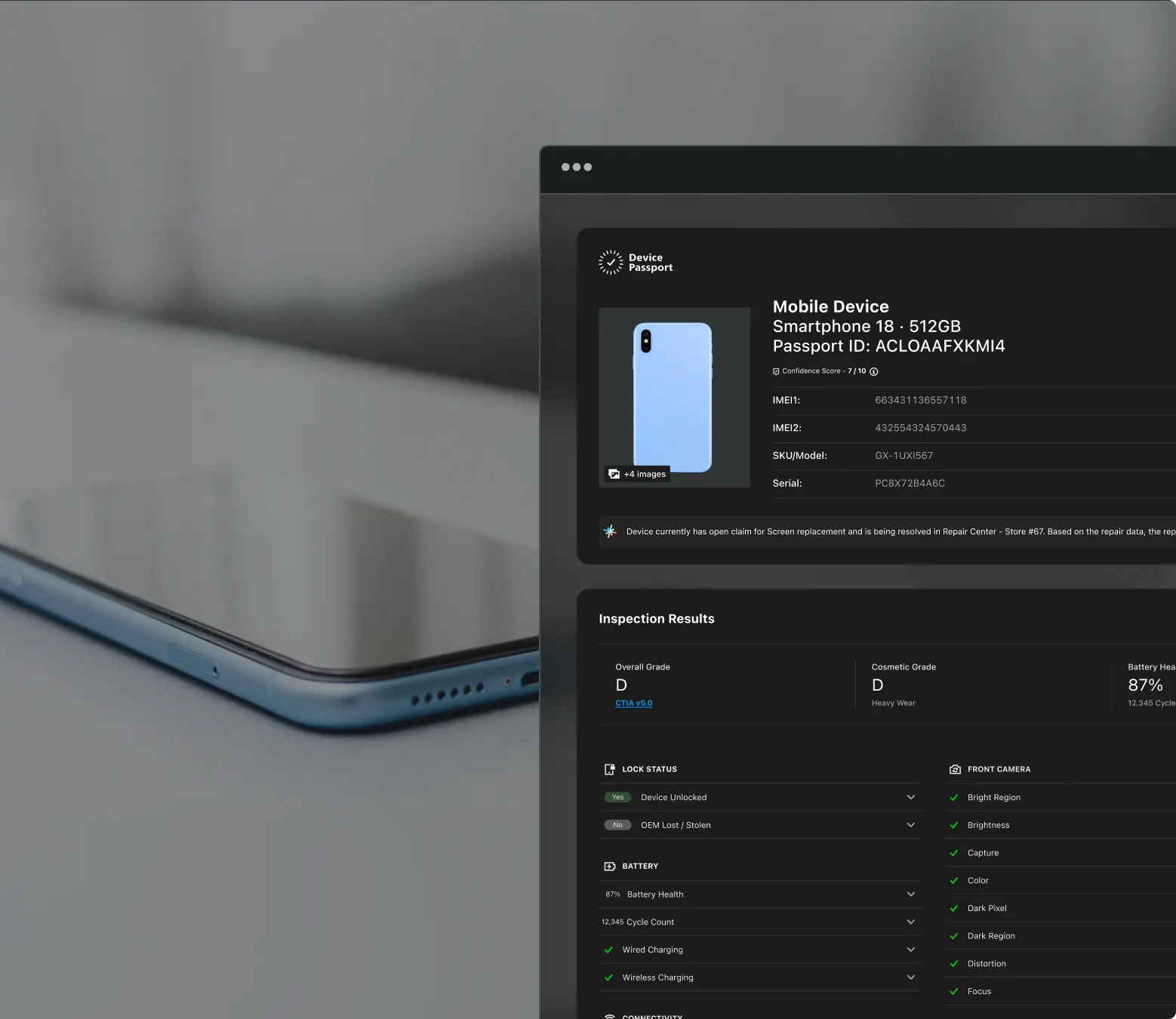
Apkudo brings every value-impacting event into one record. As a device moves through its lifecycle, the platform captures functional diagnostics, cosmetic grade, battery health, lock and blacklist status, repairs completed, and any refurbishment steps. It also records ADISA-certified data erasure: secure sanitization to a recognized industry standard. Each result writes to the device's Device Passport, a comprehensive, shareable history. You can choose what level of captured data surfaces for your audience. Buyers see what was verified and what the device is truly worth.
Most returns come from cosmetic misrepresentation and battery degradation that buyers cannot see at the point of listing. Standard electronics return rates run 15 to 20%. Apkudo attaches objective, certified condition data to every listing, so buyers know exactly what they are getting. That transparency reduces buyer remorse, Item Not As Described claims, and reverse logistics costs.
Each device goes through standardized functional testing, cosmetic grading, and lock validation. The results generate a Device Passport: a comprehensive, shareable history covering condition, battery health, blacklist status, and data erasure. The record is machine-verified, not seller-generated, so it holds up to buyer and procurement scrutiny.
Buyers bake a risk discount into bids when they cannot verify the true condition. Verified, transparent data removes that discount. Devices carrying certification command an average 25.8% price premium over unverified equivalents, and faster, trusted grading accelerates cash-to-cash cycles.