


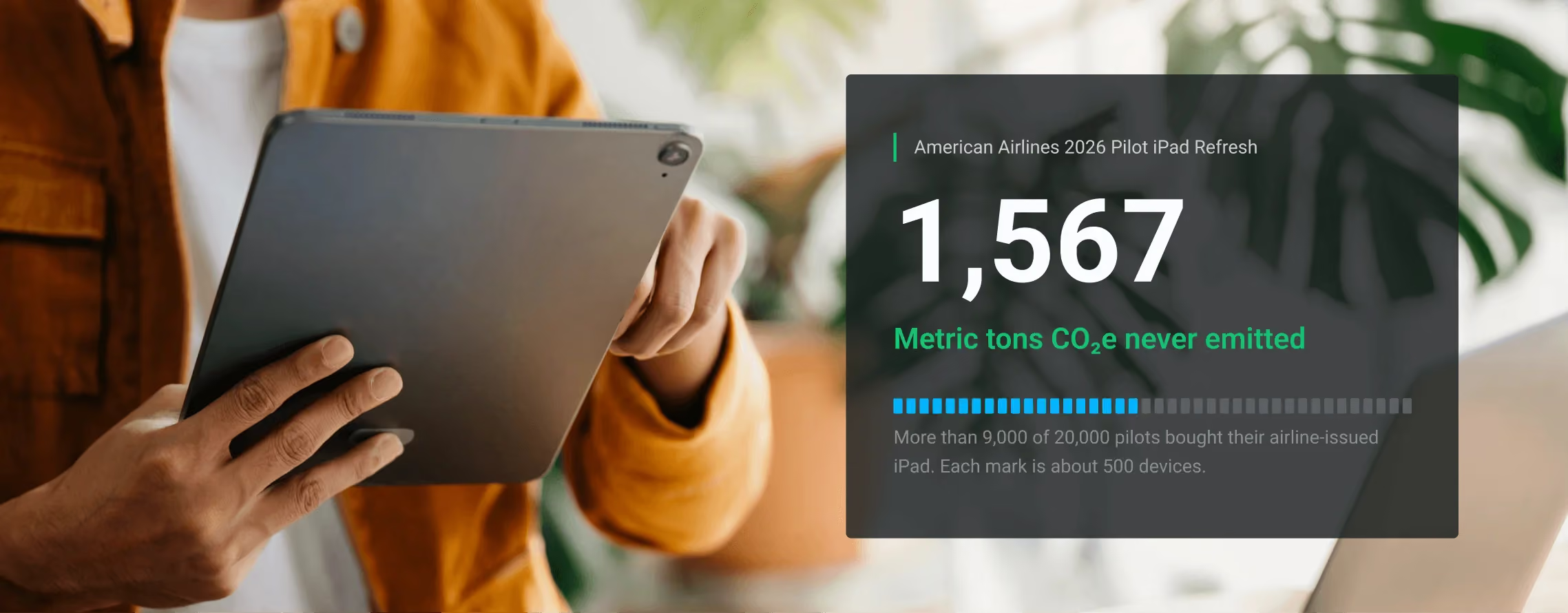
American Airlines just proved that retiring devices the right way pays off for the planet, not just the balance sheet.
Their 2026 Pilot iPad Refresh Project gave pilots a new option: buy your old device instead of shipping it back. The result was a program that avoided 1,567.51 metric tons of CO2e, 10.5 metric tons of e-waste, and 186 million gallons of water.
Most enterprise device refreshes default to recycling. Devices get boxed, shipped to a facility, wiped, and broken down for parts.
That path throws away embodied carbon. The energy already spent mining, manufacturing, and assembling a device is lost the moment it is recycled instead of reused.
American Airlines has been putting reuse first by offering employee purchase as an option to their pilots for years.
9,433 of the 20,088 devices, nearly 45% of the devices, were purchased by pilots in 2026.
Over 98% of the 20,088 iPads in this program were reused, through employee purchase, donation, or resale to the secondary market. Only a small fraction were recycled.
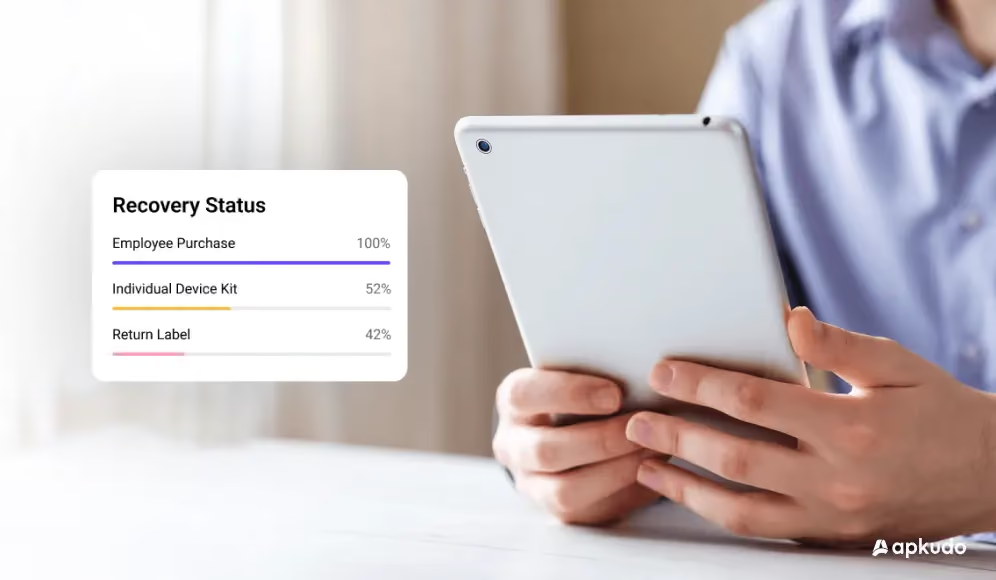
Employee purchase, done remotely. Pilots could buy their corporate-owned iPad at a below-market price. The difference is that this time, device data was sanitized remotely, while the pilot kept physical possession the entire time. No box. No shipment. No wait.
Previously, devices were purchased and then shipped to a processing facility where the data was removed and sanitized from the devices before being shipped back to each pilot.
In the Second Sense episode A Winning Strategy: Employee Purchase Programs for Corporate-Owned Devices, Apkudo's Allyson Mitchell and Tim Esteb explain what these programs are, their key elements and how to make them succeed.
Skipping the round trip to a processing facility was not a small convenience. It was 9,433 individual shipments of a 3-pound parcel, from and back to all 50 states, that never had to happen.
Eliminating those round trips avoided an additional 5.5 tCO2e, roughly the greenhouse gas footprint of an average American home's energy use for seven months.
Source: EPA Greenhouse Gas Equivalencies Calculator
Numbers like this are easy to write and hard to picture. Here is what they translate to, using standard EPA equivalency factors:
Source: EPA Greenhouse Gas Equivalencies Calculator
Manufacturing a new smartphone generates roughly 70 kg of CO2-equivalent emissions. About 80% of that comes from production, not use.
Extending a device's life avoids nearly all of that footprint. Research from the French environment agency ADEME found that a refurbished smartphone cuts overall environmental impact by 77% to 91%, and cuts carbon footprint specifically by about 87%, compared to buying new.
Reuse is not a lesser option. It is the highest-impact option available.
Businesses should take note of American Airlines’ ever expanding reuse-first mindset and consider employee-purchase options to multiply the environmental savings, the cost savings, and the employee benefit. Employees who know they can eventually buy their device also tend to take better care of it, which means fewer break-fix tickets and more devices in good enough shape to reuse.
Every refresh is a choice. American Airlines chose reuse first, and the atmosphere, the water supply, and 9,433 pilots all came out ahead.
Impact calculations were performed using Apkudo's Impact Models, built with input from sustainability experts and validated against ISO 14040/44 standards for lifecycle analysis.

.webp)

